- 04.05 - 14.05.2026
Cleo Diára in residence at Moussem
Please, Love Me!
- 27.11 - 29.11.2026
- Performances
Cleo Diára
Please, Love Me!
- FRI 27.11.2026 7:30 PM
- SAT 28.11.2026 4:00 PM
- SUN 29.11.2026 7:30 PM
- Performances
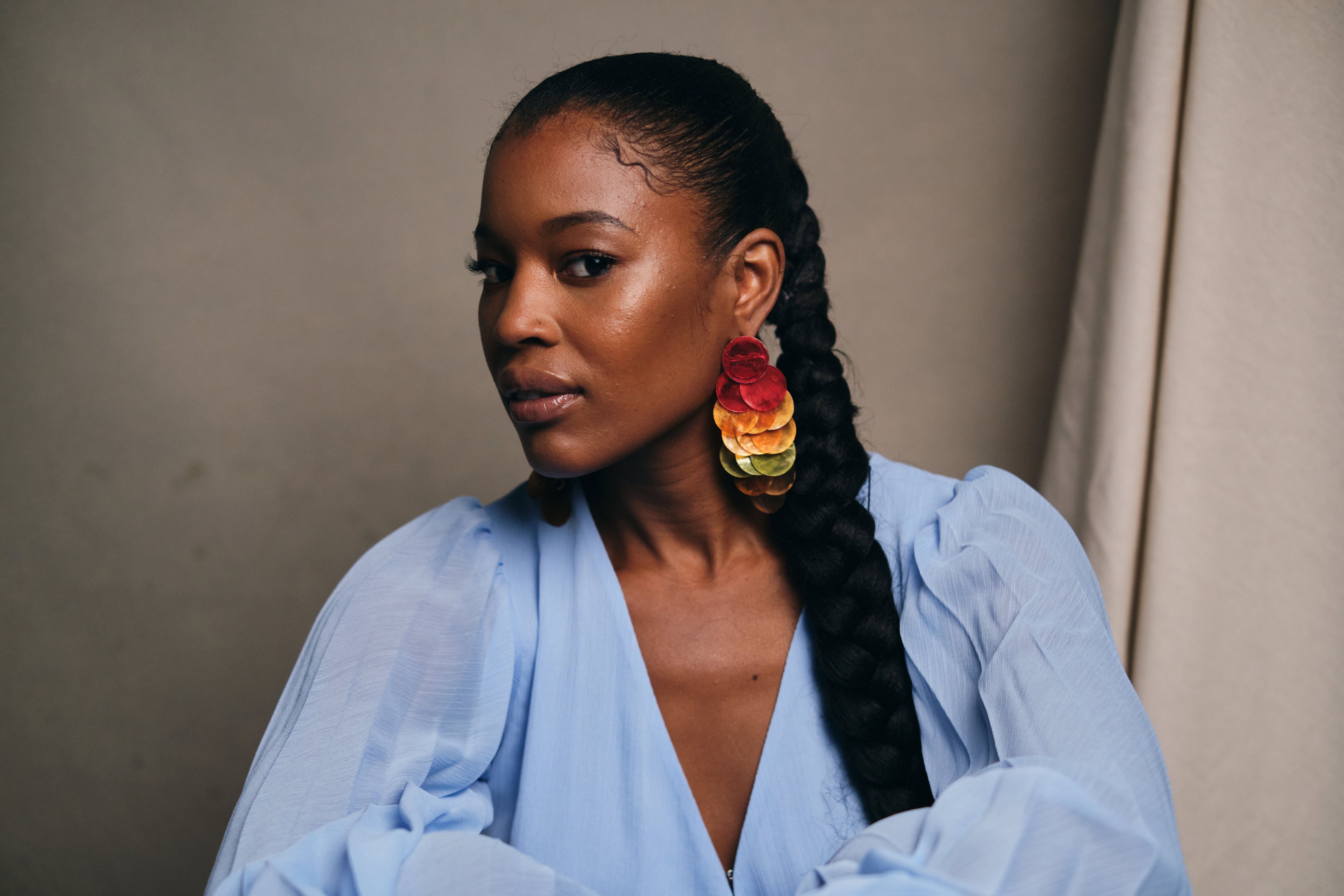
Cléo Diára was born in 1987 in Cidade da Praia, Cabo Verde. She moved to Lisbon during childhood, where she completed most of her education. She began her theatrical journey with the university theater group Miscutem and, in 2012, enrolled at the Escola Superior de Teatro e Cinema.
Since 2015, she has developed work as a multidisciplinary artist, performing in several theatrical projects by renowned Portuguese directors, including Mário Coelho, Mónica Calle, Pedro Baptista, Rogério Carvalho, and Sónia Baptista.
In 2020, she was awarded the Amélia Rey Colaço Grant for the creation of the performance Aurora Negra, developed in collaboration with Isabél Zuaa and Nádia Yracema. The production premiered at Teatro Nacional D. Maria II and toured nationally. Since then, the collective Aurora Negra has created Cosmos (Teatro Nacional D. Maria II, 2022) and Missão da Missão (Teatro do Bairro Alto, 2023).
Alongside her theatre work, she has appeared in several national and international film productions, including Diamantino (by Gabriel Abrantes and Daniel Schmidt), Verão Danado and Entroncamento (by Pedro Cabeleira), Terra Amarela (by Dinis Costa), Nha Mila (by Denise Fernandes), and O Vento Assobiando nas Gruas (by Jean Waltz), among others.
In 2025, she received the Best Actress award in the Un Certain Regard section at the Festival de Cannes for her performance in O Riso e a Faca, directed by Pedro Pinho. In 2026 she was selected for the European Shooting Stars programme.